North of the Netherlands micro food adventure 🚲
This micro food adventure is part of a series of microadventures to discover sustainable food pioneers. Read more about our the impact of local food and don’t forget to let us know how you experienced this route (mareike@forkranger.com).
Link to the full route – 48km
Link to the shortened route – 34km (you skip the third stop Tuin van Zwaantje)
Tip: if you use komoot app without the navigation function, it’s free!
For Mareike, this is a trip down memory lane, as she grew up in this area. Plan at least 4-5 hours for this trip, so you have plenty of time for breaks. Also, check the opening hours all the way at the bottom of this page, to see which stops are open when you’ve planned your trip.
First stop: De Balloohoeve
Take an OV-bike from the train station in Assen (or bring your own bike) and make your way towards De Balloohoeve (after almost 5 km). They have got a farm shop where they sell their organic products, but you can also spend the night on their campsite.
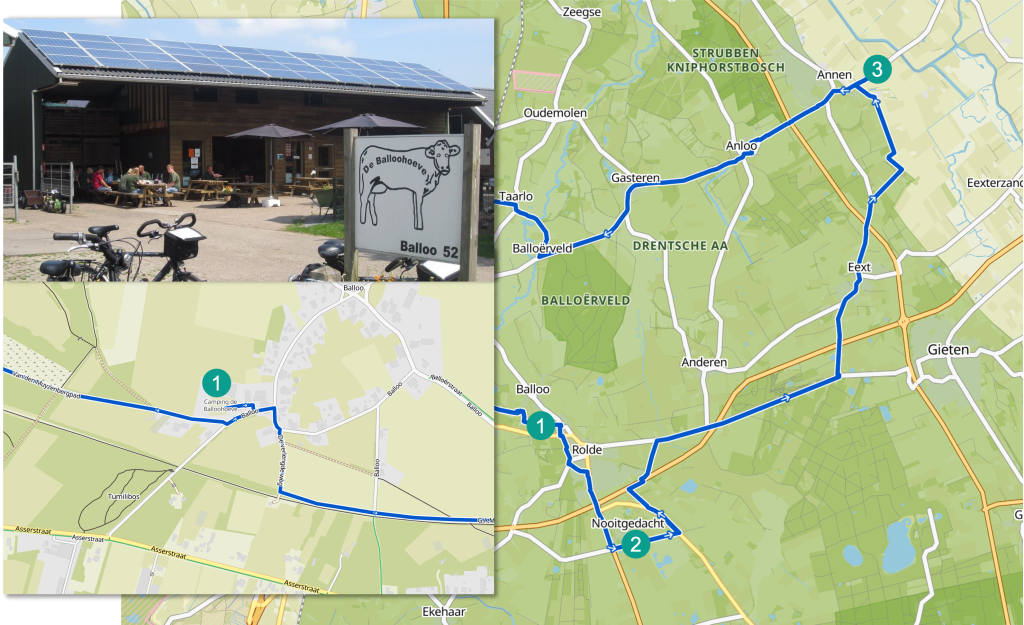
Why we picked this stop for you → Even though we need to eat less animal products in a sustainable diet, if you do eat some animal products De Balloohoeve’s cows set an example. If you come here between April and September you won’t find them at the stables, because they will be grazing in the nearby nature reserves Balloerveld and Kampsheide. This is an excellent example of Silvopasture, as researched by Project Drawdown as one of the 100 climate solutions – nowhere near eating more plant-rich diets and halving food waste but still. It’s about combining trees, pasture, and forage into a single system. Don’t get me wrong, I am not saying we should add cows to all our nature reserves, but transforming the current big green patches cows usually are held on back to nature would help the climate and nature.
Second stop: De Kruidenwei
You reach the second stop De Kruidenwei – an organic goat cheese farm with a farm shop – after almost 10km.
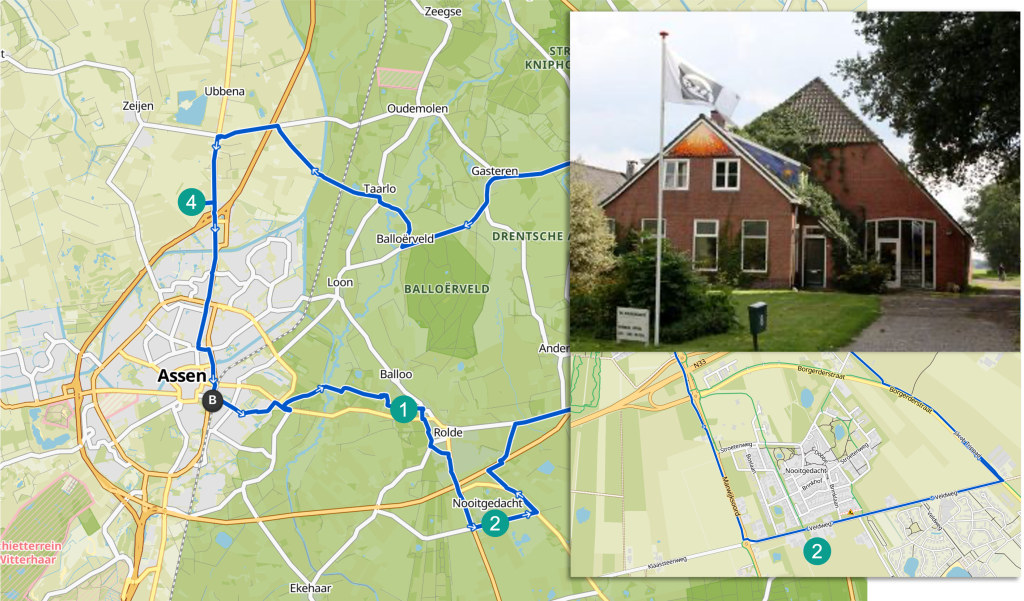
Why we picked this stop for you → Their name says it all, it’s named De Kruidenwei because their pasture is full of herbs. Depending on when you visit, you’ll be able to see this. We’ve already discovered that adding trees can be a solution, but simply increasing the diversity of the plants is great for biodiversity. It’s much better than a monoculture of rye grass. What is also interesting is that you can see the real space of animal products here. It’s not just the space the goat needs to move around, but also the space for their feed. At De Kruidenwei part of the land is used to grow the feed for the goats in wintertime, so that’s why there are ‘only’ 100 goats on 10 hectares. Compare this to a factory setting, where goats are held indoors and only get 1-1.5 m2 per goat, and their food is imported. So for 100 goats, you would need only 10m x 10m of space, while the feed is grown on land out of sight.
Third stop: Tuin van Zwaantje
Probably without noticing you entered De Hondsrug, the first UNESCO geopark, and you’ll see more of it on the way to your third stop. It’s a sandy moraine that was formed in the last ice age. When most of the land around it was swampy this was one of the first places where people lived. That’s why you’ll also find hunebedden in this area. You’ll feel it in your legs that you have to cycle a little bit uphill toward the third stop – welcome to the hondsrug ;).
After a bit of cycling – 26km from the start – you will reach the third stop Tuin van Zwaantje, a beautiful designed self-harvest garden. By the way, we asked for you, and you are allowed to look around, as long as you respect the place and leave all the produce. Tip! You can see it even better from up in the air (check out the video on their homepage). You can really feel that a lot of thought has gone into it, as you can read here.
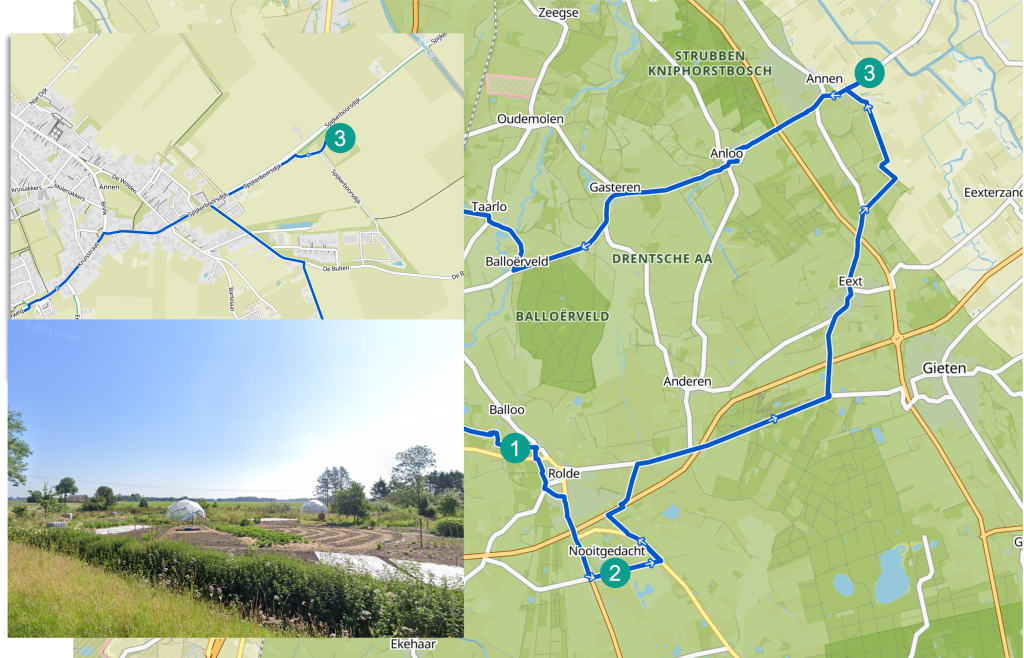
Why we picked this stop for you → The first reason is aesthetics: this place is just beautiful. You might think this hasn’t got a lot to do with sustainability, but to make more people part of a movement, you have to make it beautiful and inspiring (that’s what we do at Fork Ranger too!). It’s the same with the food on our plate. If we put an effort into how we present it to ourselves and others who join for dinner, there’s a inherent value in that. Also we wanted to show you how different local food formats can work – all based on a harvest season’s commitment. The first option at their place is to harvest the vegetables yourself (obviously the cheapest option because you do part of the work). The second option is to pick-up the harvested vegetables at the garden (remember the sustainable transport mode that matters here!) and the third and fourth options are to have it delivered (if you live relatively nearby and with a few subscribers close) or pick it up at a partnering shop. In short, this already shows you how much diversity in local food formats there is, so don’t think visiting a farm shop is the only one. Which one would be the format that would fit you? (doesn’t need to be at this specific garden)
Fourth stop: Hof van Rhee
Past Annen, you will cycle back down from the Hondsrug towards the Gasterense Diep, the Balloerveld and Taarlose diep, and you will reach the fourth (and last) stop Hof van Rhee (43km from the start).
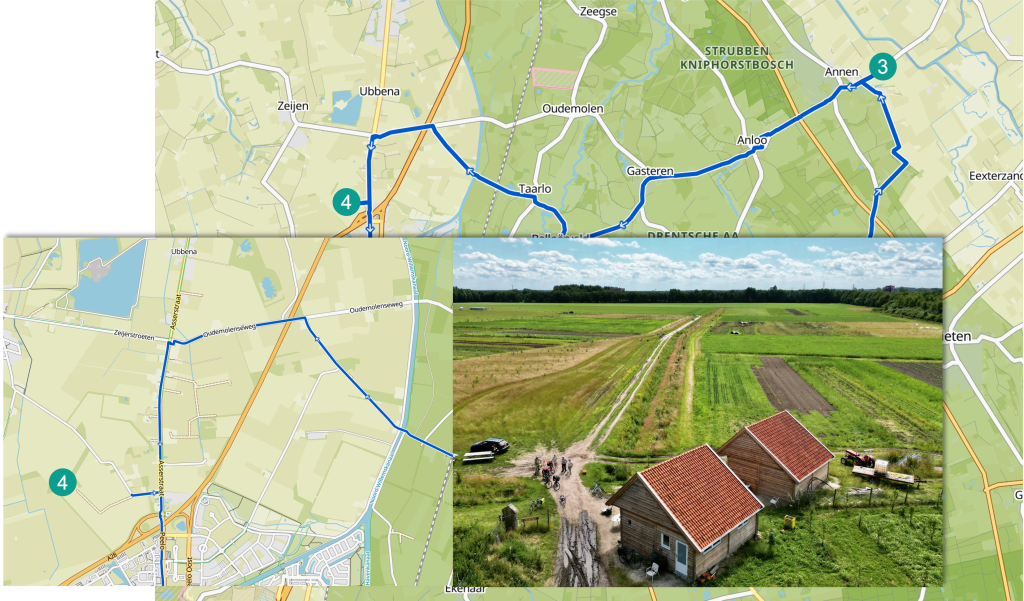
Why we picked this stop for you → This is one of the 22 Herenboeren farms in the Netherlands. While you also commit to a share of the harvest, it’s more than just that. The unique thing about a Herenboeren farm is: you own 1/250th of the farm. Together with 250 other households a farmer is hired who brings in the agricultural knowledge. This commitment enables also a stable economic foundation. At the time of writing there was still an option to join this farm in Assen, so if you live close, have a look on their webpage and learn more. There are many more Herenboeren farms all around the Netherlands, so if you are inspired by the concept, look for one near you on this page.
Do your legs feel tired? I can imagine! Good news: it’s just a short ride back to the train station in Assen 🚉.
Extra info (updated April 2025):
- De Balloohoeve is open: Mondays 13.00–17.00, Tuesdays til Fridays 9.30–17.00, Saturdays 9.00– 17.00.
- De Kruidenwei is open: Thursday til Saturdays 10:00-17:00.
- More about De Hondsrug and locations of the hunebedden: https://www.dehondsrug.nl