Over onze Recepten
F A Q
Over onze Recepten
Onze standaard voor recepten
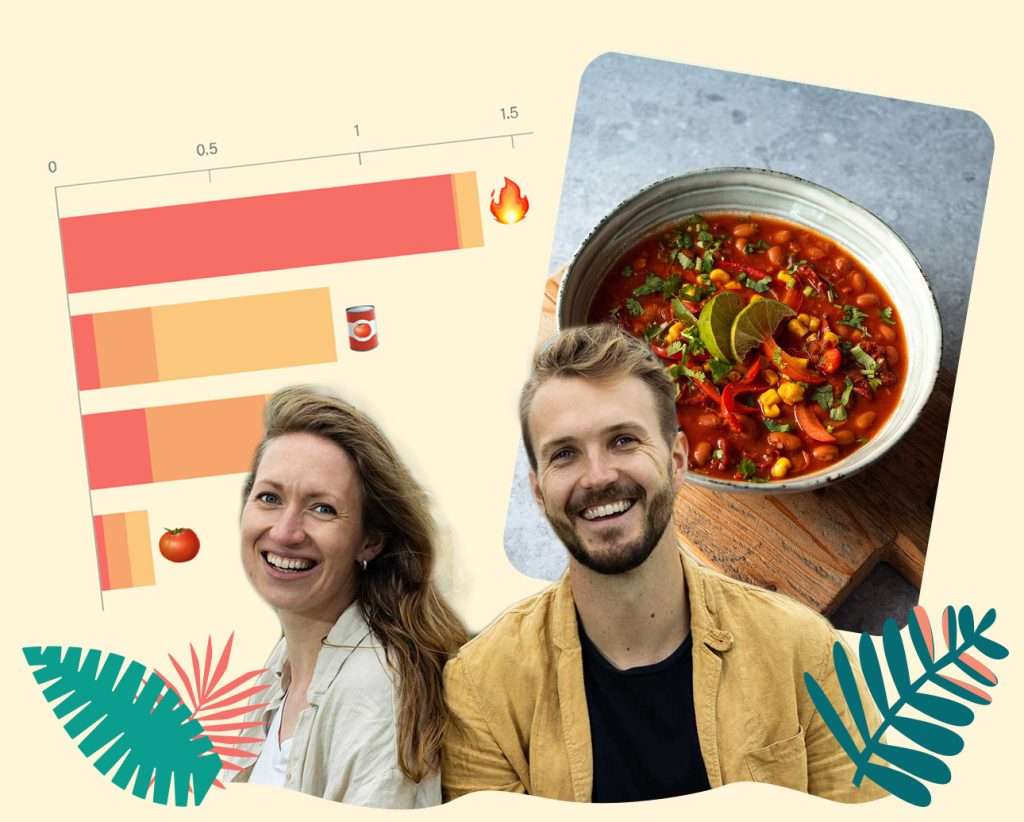
The ideal Fork Ranger recipe uses common ingredients in unexpected combinations or new flavours. It’s easy enough for someone who wouldn’t consider themselves to be a ‘good cook’, but exciting enough for someone who is.
🛒 Alle ingrediënten moeten verkrijgbaar zijn bij de reguliere supermarkt (hiervoor gebruiken wij ah.nl)
🍅🥦🥥 Ten minste 3 verschillende groenten, fruit en/of noten, met het oog op gezondheidsrichtlijnen en een vullende maaltijd
8️⃣ Max 8 ingredients, excl. spices, onion and garlic, bouillon, so that your shopping list isn’t too long
🐮Max 1 animal-based ingredient, excl. parmesan so that it’s in line with ons Kompas
💪 Source of protein (nuts, beans, lentils, peas, etc.), especially if it’s not pasta or bread-based, which has a higher protein count
🥫Hoeveelheden ingrediënten komen zoveel mogelijk overeen met de verpakte hoeveelheid in een recept voor 4 personen (bijv. 400 g tomaten uit blik, niet 300 g)
🤔 Max 1 ingrediënt dat mogelijk nieuw/onbekend is, om mensen niet af te schrikken
We gaan voor 500 tot 800 kcal per portie, maar sommige recepten bevatten wat meer. Er zijn wat makkelijke aanpassingen die je zelf kan doen, als dit belangrijk voor je is:
- Risotto’s which contain margarine or butter (you can leave it away)
- Stamppotten die margarine of boter bevatten (je kunt het ook weglaten)
- Quiches en plaattaarten die bladerdeeg bevatten (je kunt er ook een tray bake van maken zonder bladerdeeg)
- Wraps die avocado's bevatten (je kunt ook minder gebruiken)
We zijn ook bezig om de eiwit hoeveelheden in alle recepten opnieuw te bekijken en verbeteringen door te voeren waar gewenst.
Keep in mind that you’ll also might eat more than just one portion, see further details below.

Krijg ik alle voedingsstoffen binnen in een Fork Ranger maaltijd?
It is always hard to confirm that you get all the nutrients in one meal because we don’t know what you choose for breakfast and lunch. And exactly that is important: that you get all nutrients over a day/week.
Maar wat we wel kunnen zeggen: we hebben de recepten ontworpen volgens de EAT Lancet aanbeveling voor een duurzaam en gezond voedingspatroon. Hoe dat er specifiek voor Nederland uit kan zien, zie je op onze poster die de wekelijkse aanbeveling laat zien.
We letten erop dat de recepten voldoende vullend zijn, groente en een bron van eiwit bevatten, zoals je in onze standaard hierboven kan zien. Veel van de andere recepten die je kan vinden bevatten naar onze mening niet genoeg groente of eiwitbronnen en zijn niet altijd vullend, en precies daarom zijn we begonnen met zelf recepten maken 😉
There are still a few Fork Ranger recipes we’ve made first that don’t fully meet this standard (yet), but most of them do!
Hoeveel is een portie?
All our recipes are displayed for 4 portions. This doesn’t mean that it’s enough for 4 big eaters. For example, Frank and Mareike love food and eat 3 portions together.
We did keep the 4-portion-based recipes as this is used in many other cookbooks, and has become something like a standard. We’ve experienced that it leads to confusion if we make actual 4 person recipes.
Is het genoemde gewicht van bonen uit blik het totale gewicht of het uitlekgewicht?
We mention the total weight. But don’t worry if you’ve used it as drained weight before, it just means you got some extra protein ;).
Why don’t you use dried legumes (beans, lentils) instead of canned ones? Aren’t they better for the climate?
Dried legumes have a slightly smaller CO2 footprint than their canned counterparts. However, this doesn’t include us cooking them at home. In the end, the difference for the climate is really small.
Therefore we prefer canned legumes, as they are more convenient to use – which means that it will be easier for us to make the change to cook with beans and lentils more often.
De impact van meer mensen die vlees vervangen door bronnen van plantaardig eiwit zoals peulvruchten weegt veel zwaarder dan de impact van een aantal mensen die van ingeblikte bonen en linzen overstappen op gedroogde.
Moet ik alle voorbereiding vooraf doen?
We divide our recipes into ‘prep’ and ‘cook’ steps.
The reason we show the ‘prep’ steps first is that we’ve found that in many other recipes you had to cut something during the cooking process and you are stressed to cut it in time while the frying pan is on the fire.
We only add some ‘prep’ steps in the ‘cook’ steps when there is more than 10 minutes time to do something.
Obviously if you’re a quick cook, you can also do some ‘prep’ steps while cooking according to your own insights.
Wat voor soort pannen/kookgerei heb ik nodig?
Let’s start with a good knife. We found this really helps making the preparation part more enjoyable and quicker.
We proberen het aantal pannen tot een minimum te beperken, maar voor de meeste recepten heb je een middelgrote kookpan en een koekenpan nodig.
Sommige recepten hebben ook een staafmixer/blender nodig om te pureren. Als je een keukenmachine hebt, kun je die natuurlijk gebruiken.
Why don’t you also specify ingredient amounts and temperatures in different units (pounds, ounces, Fahrenheit)?
It’s quite a challenge to provide this in a user-friendly way. That’s why we haven’t implemented it so far.
We don’t want to display them next to each other, as that makes recipe text longer, always containing irrelevant information for some people. So there should be toggle (or similar) so the person cooking can set their preferences.
As we create our own specific formats for the recipes on the website and for our app, this costs quite some development. So far, we’ve prioritised other developments.
Welke olie of boter moet ik gebruiken om in te bakken?
We generally use sunflower- or olive oil. Sunflower oil has a neutral flavor and a higher smoking point, but in most cases this doesn’t matter.
We specificeren wel het type olie als dat belangrijk is in het recept, bijvoorbeeld als je een olie nodig hebt die stabiel blijft bij hogere temperaturen.
Wat voor room moet ik gebruiken?
We gebruiken meestal sojaroom, maar voor de meeste recepten kun je ook andere soorten room gebruiken. Bijvoorbeeld, slagroom werkt ook (heeft meestal een soortgelijke consistentie als sojaroom).
In Nederland hebben we ook kookroom (die een lager vetpercentage heeft dan slagroom). Zure room geeft misschien een wat zuurdere smaak, dus houd dat in gedachten als je ook nog citroen/limoen toevoegt (proef af en toe en voeg geleidelijk toe).
Why don’t you give more detailed instructions?
We moeten zeggen: dit is lastig om te balanceren. Soms helpen meer details echt om te begrijpen hoe je een maaltijd het beste kunt bereiden.
Het maakt echter ook veel stappen schijnbaar ingewikkelder (simpelweg door meer tekst te bevatten) en dit wordt gemakkelijk een hindernis om een nieuw recept uit te proberen.
Daarnaast vinden wij dat koken ook een creatief en leerproces is en dat er ruimte moet zijn om je eigen intuïtie en inzicht te gebruiken om beslissingen te nemen over hoe de maaltijd te bereiden.
How can I adjust the taste if it’s too much for me?
We try to keep meals as balanced as possible and watch out, for example to make it not too spicy. It’s better to add more if you like it, than to have your mouth on fire 
We raden ook aan om zout toe te voegen bij het koken van aardappelen of pasta.
Als je de smaak toch wilt aanpassen, volg dan deze regels:
If it’s te flauw is – add salt & pepper to taste.
If it’s te zout is – compensate with acid such as vinegar; lemon or lime juice, or something sweet like sugar or honey
If it’s te zoet is – add an acid or seasonings such as vinegar; lemon or lime juice, or chopped fresh herbs
If it’s te pittig is – add a sweetener such as sugar or honey
If it’s te zuur is – add a fat such as olive oil. This will coat your tongue and block your taste buds from the acidity. Or try adding a sweetener like sugar or honey.
If it’s te bitter is – add salt or an acid such as vinegar or lemon juice
For Cooking Club members: let us know whenever you do this as we’d like to know. We try to tailor our recipes in a way that it’s a good balance for most people.